Landowner Payments for Depredation or Crop Loss - Ivan D. Djambov Last Updated: November 21, 2013
If big game animals are damaging cultivated crops, fences,
or equipment on private land, the landowner or lessee can receive
compensation. The Division of Wildlife
Resources (DWR) is responsible to contact the landowner or lessee within 72
hours and assess the reported damage.
UCA 23-16-4 specifies the responsibilities of DWR to
compensate for the damages. The statute
directs the following to be considered when determining damage payment:
1. The extent of the damage; and
2. The revenue the landowner derives from:
a. participation in a cooperative wildlife
management unit;
b. use of landowner association permits;
c. use of mitigation permits; and
d. charging for hunter access.
According to statue, DWR
compensation for damages to cultivated crops is to include:
1. The full replacement value in the local market;
and
2. The cost of delivery of a replacement crop.
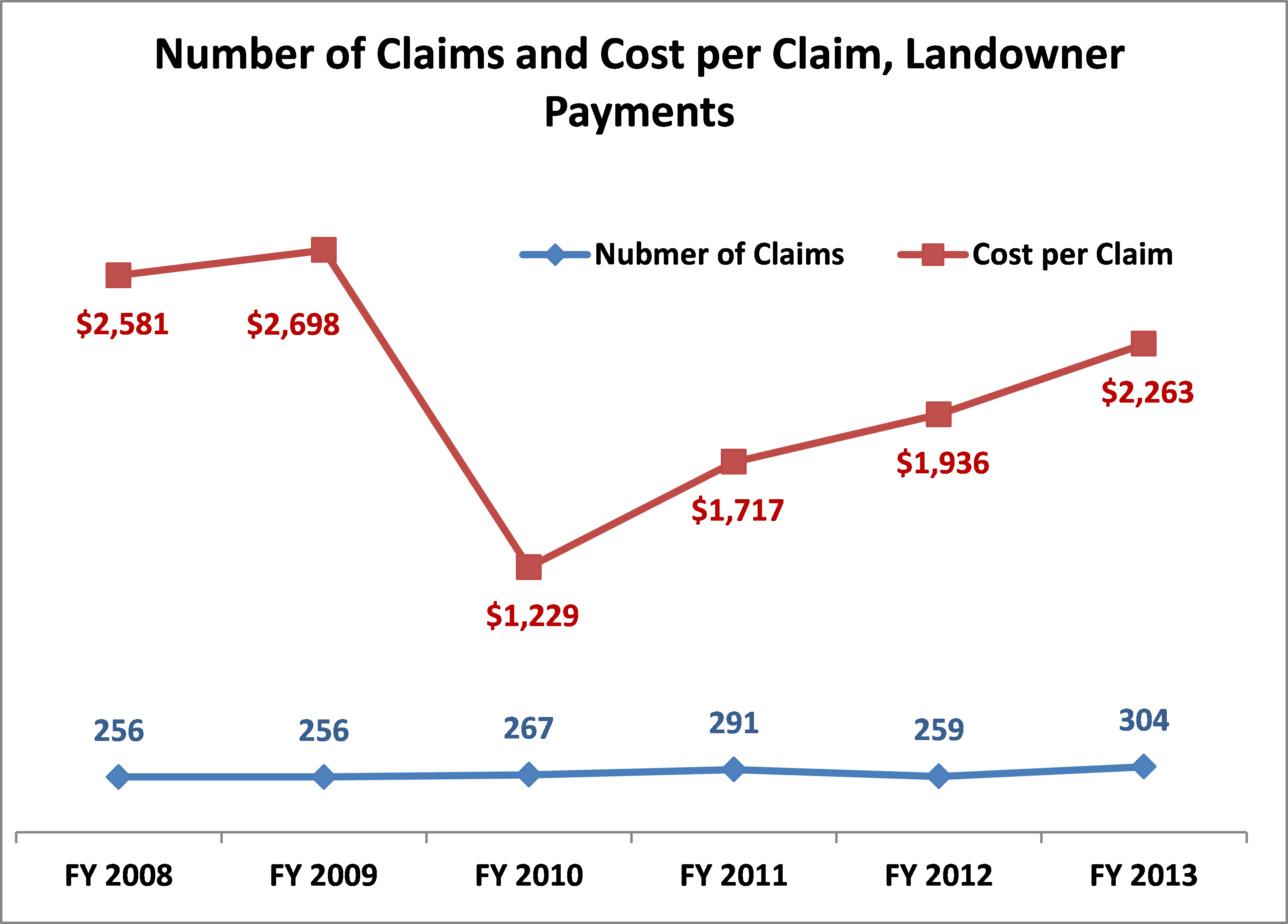
The number of landowner claims for
big game depredation has been increasing since FY 2008 (see figure below). Among
the reasons for this increase, according to DWR, are drought conditions, cold
winters, fires, etc. The data also shows
that the cost per claim is increasing as well.
DWR staff stated that one of the main reasons for the cost increase is
the fact that the cost for replacement of these types of commodities has been
increasing. For example, hay has almost
doubled in price.
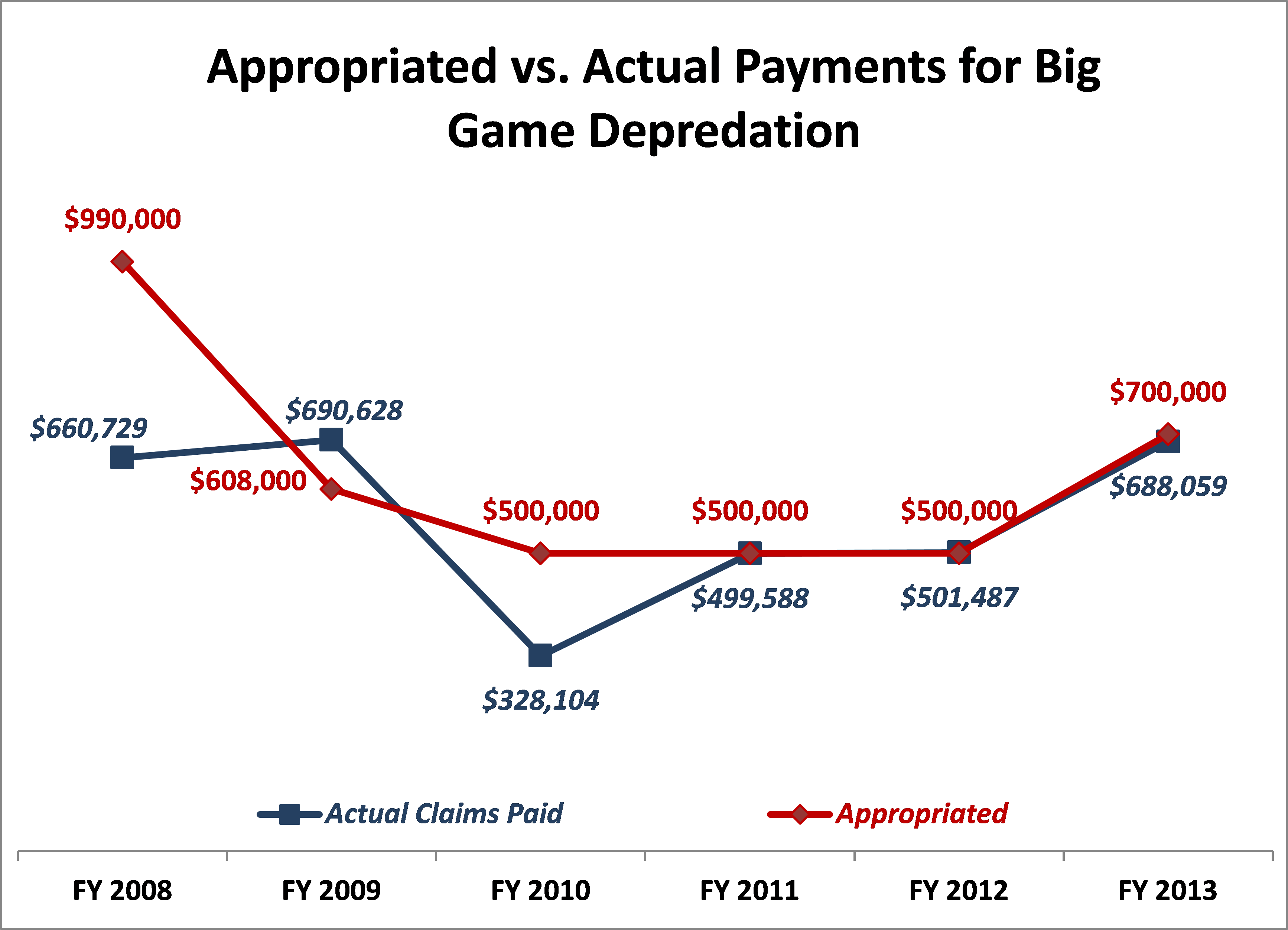
DWR receives an annual appropriation
for such claims. Both the appropriated and actual amount for depredation payments were increased in FY 2013.
DWR
If these trends continue, DWR will need
to budget more money for depredation payments, or re-assess and improve the
effectiveness of its damage-prevention approach.
If big game animals are damaging cultivated crops, fences, or equipment on private land, the landowner or lessee can receive compensation. The Division of Wildlife Resources (DWR) is responsible to contact the landowner or lessee within 72 hours and assess the reported damage.
UCA 23-16-4 specifies the responsibilities of DWR to compensate for the damages. The statute directs the following to be considered when determining damage payment:
1. The extent of the damage; and
2. The revenue the landowner derives from:
a. participation in a cooperative wildlife management unit;
b. use of landowner association permits;
c. use of mitigation permits; and
d. charging for hunter access.
According to statue, DWR compensation for damages to cultivated crops is to include:
1. The full replacement value in the local market; and
2. The cost of delivery of a replacement crop.
The number of landowner claims for big game depredation has been increasing since FY 2008 (see figure below). Among the reasons for this increase, according to DWR, are drought conditions, cold winters, fires, etc. The data also shows that the cost per claim is increasing as well. DWR staff stated that one of the main reasons for the cost increase is the fact that the cost for replacement of these types of commodities has been increasing. For example, hay has almost doubled in price.
DWR receives an annual appropriation for such claims. Both the appropriated and actual amount for depredation payments were increased in FY 2013.
DWR
If these trends continue, DWR will need to budget more money for depredation payments, or re-assess and improve the effectiveness of its damage-prevention approach.